

School buses
There are many things TiNLD has discussed over the years, but we have yet to cover school buses. These rather unassuming, underrated and often misunderstood knights of the road, can come across a bit of a taboo subject unless you or a family member relies on it.
Given it's half-term for many and with some upcoming related issues, such as the Seahaven/Breakwater/High Cliff issue, is now a perfect time to be 'schooled' on the subject?
Schools in
A school bus, for our purposes is a service which:
- Has a number
- Runs to a timetable
- Dedicated to a certain school or schools
- Runs on schooldays only
- Open to the public, funded by Local Authority
The specifics around this is can be quite fluid. For instance, some routes operate to the schools dates, not the councils (492/494), some are worked as part of a regular timetable (123 & 166), some are not (318 & 468) and some have specific arrangements due to entering private grounds (76A).
Here in Newhaven & Lewes District, we have a number of routes which contain school elements in part or full. These are 28, 29, 76A, 119, 121, 123, 125, 126, 149, 150, 166, 167, 318, 468, 492 & 494.
There is a historical record of all Brighton & Hove Bus specific services on their historical website, including such gems as the route 92 lettered services for Tideway School among many others.
Mobility buses
It's worth noting that specific services, designed for Specific purposes aren't new and have changed as national guidance, societal attitudes and ease of implementation changes. The best example of this being Mobility Buses. Operating in many areas of London over 40 years ago, a push for better accessibility has seen all but one route disappear.
London gave prefix numbers for specific services - 5xx (Red Arrow), 6xx (School), 7xx (Express) and 9xx (Mobility). As time went on the tiles on stops denoting the route numbers, simply displayed 'xxxxxx buses stopped here'
Even night buses have, in some areas become absorbed into the main routes, only requiring an 'N' prefix if extending the day service.
The magic school bus
We think of school buses as the American model. Big lumbering yellow boxes with narrow doorways and a big red stop sign. They are the symbol of schooling depicted in many children's cartoons. As a US car driver, they are superior in the road and you can be in trouble for overtaking one.
With a view to nationwide funding, in 2007 FirstGroup launched a test of the concept in the UK. Using a mixture of local authority grants and private corporate funding, 20 American style buses were imported for the job, but were, as you can imagine, a logistical headache given the unique dimensions and PSVAR at the time.
Despite an overwhelming 86% support from parents for a dedicated school bus, the project slowly dissolved over the next few years.
Plumpton bus
An interesting example of success is the Plumpton College bus. A great example of a private contract closed door bus service.
Operated by Spirit of Sussex, these are lettered routes running across Sussex. Pupils and teachers pay for the service for which you are registered. An app. knows your selected service, where you are likely to board and the service can be tracked with specific updates for yourself and/or family members. No one else can use the service, which has caused problems in the past.
The set up is praised and it is a wonder as to how this could work as a model to follow when considering safeguarding of pupils on regular school services, additional to simply being able to track the bus.
There is also easier management of issues between user, school and company.
Omnibus
The last of these definitions is key to our discussion.
Buses funded by Local Authority and operated by a bus company for said Authority are, by-and-large, open to everyone.
Route 121 even caters for Chailey St Peter's Primary School. Though it's noted there is no specific guidance on lower school pupils using the bus. Remember child fares start from just 5 years old. The recent free offer for children meant Compass Travel guiding this with an unaccompanied fare being from 10 years.
During COVID buses were 'closed' to the public. This was to aid isolation and reduce spread over a wider area of people. In London, every second bus on key routes during school travel hours were dedicated to scholars. Once lockdown lifted buses returned to normal.
Prior to the changes to the school time at Seahaven, buses operated in and out of Denton and South Heighton using buses moving between two routes. This logical set up was removed when it was found buses couldn't be spared with the new timetable.
These were the first buses and again, outside of school days there were none. Those finishing school altogether needing a peak service then had nothing until 145, itself also funded by East Sussex County Council, at 09.30. Instead giving an incentive to learn to drive instead - if indeed you could.
Safety in Numbers
There is something to say for the phycological barrier that numbering brings.
Take 494 for instance. This route is the last direct service linking Newhaven to Peacehaven. Route 14 finish running at 13.30.
Passengers are less encouraged to use a bus that is both numbered for a specific purpose and with an almost entire load of schoolchildren. It can be quite intimidating, despite the public having a full right to use it.
Despite this, we cannot hide from the fact that there is a stigma to using the school bus, espacailly when there are alternatives, though maybe not immediately available. This is particularly true for those setting a challenge of say getting every Brighton & Hove bus route or even travel training. One has to ask if it is nessercerry or even appropriate.
There have been several instances have been noted of regular passengers being refused travel, even parents of the associated school when finishing or going to school meetings. In some areas buses actually run into private school grounds, requiring bus drivers have an enhanced, enhanced DBS check.
There is a unwritten sense of ownership. For many, the school bus may be their only experience on a full public bus service. Some behaviors, even on regular numbered services, go unnoticed and some behaviors are questionable. There have been reports and complains made to schools over the language pupils use and conversation content, much of which would flag safeguarding protocol.
There is some work being undertaken presently between a leading bus company and local schools, of which do not have a dedicated service, to support training pupils on bus use for school and social times.
Number bonds
There is a broader point here too. Practically, the whole point of numbering (or indeed lettering) a service is to demonstrate a different routing.
Recently, routes 12 & 23 were modified to include school elements which operate a school time diversion every weekday regardless of school being open or not. Route 12 replacing a dedicated school/industrial estate hybrid service 92. It is easier for this 12 to start back at Telscombe Cliffs Way on a different route altogether, than it is to finish. Conversely, route 12 buses going to Chyngton take an entirely different route for the majority of the day. Once you get used to it, it seems less an issue.
Route 23 operates one bus, every weekday via Whitehawk towards Universities in the morning and towards Peacehaven in the afternoon to acter for school traffic.
Seahaven could operate 492 and 494 as route 12 and 14 respectively, this would be supported by running via Seahaven in both cases (as 123 had previously), however passengers would have to wait and have sufficient time added (whilst not being overtaken). All this being especially difficult when two or more schools have differing timings.
In some areas the inclusion of school services can also make timetable very complicated, such as 119 & 126 in Alfriston where buses also have to wait for each other to transfer pupils.
Square route
What we have here is an interesting and complex issue.
Looking at certain routes, as in London, school buses can provide some unique but potentially useful links. There are a few examples:
East Saltdean - Peacehaven, currently Provided by 494, this route may be useful when Morrisons opens.
Peacehaven - Lewes, currently provided by 123 (AM schooldays only). This service is regularly used by commuters to Lewes. An evening peak retuning service was once operated.
Chiddingly - Lewes, currently 318 only runs to Kings Academy, Ringmer. There has been a request to run daily service to/from the village to connect with a town. Uckfield and Lewes could be done in one trip.
Gibbon Road - New Road, currently only doable on route 145 three times a day in shopping hour only. Route 492 links Seahaven Academy to Newhaven Town Station non-stop. With requests to run a more frequent service in Gibbon Road and the need to accommodate more schools, does 145 need a better frequency?
The examples given by the amendments to 12 and 23 could be an example of opening up school buses to a greater audience and solving many of the discussed issues of accessibility and car reliance as well as being a great example to younger people.
So the questions -
Do you think school buses need a radical rethink?
Does the guidance and rules around school buses need to be clearer?
Or are they simply a thing of the past?

Upper school
A 492 on a positioning move to Seahaven Academy to take the afternoon service. School buses can be a logistical headache as shown when Seahaven changes it's school day timetable by 30 minutes.

School timetable
A route 123 bus approches Newhaven from Peacehaven. This is a busy one way service to Lewes via Priory School. It operates schooldays only and is the only direct link. There are calls for a return service as many come back on the train.

Oh, so near...
Route if the 318 from Chiddingly to King's School. Chiddingly has no local bus service (bar the Mon-Fri Flexibus model). 318 followes the twice daily route 29B via Halland. A link and better conncetions have been requsted, see: https://www.facebook.com/share/p/1BseFnLykD/
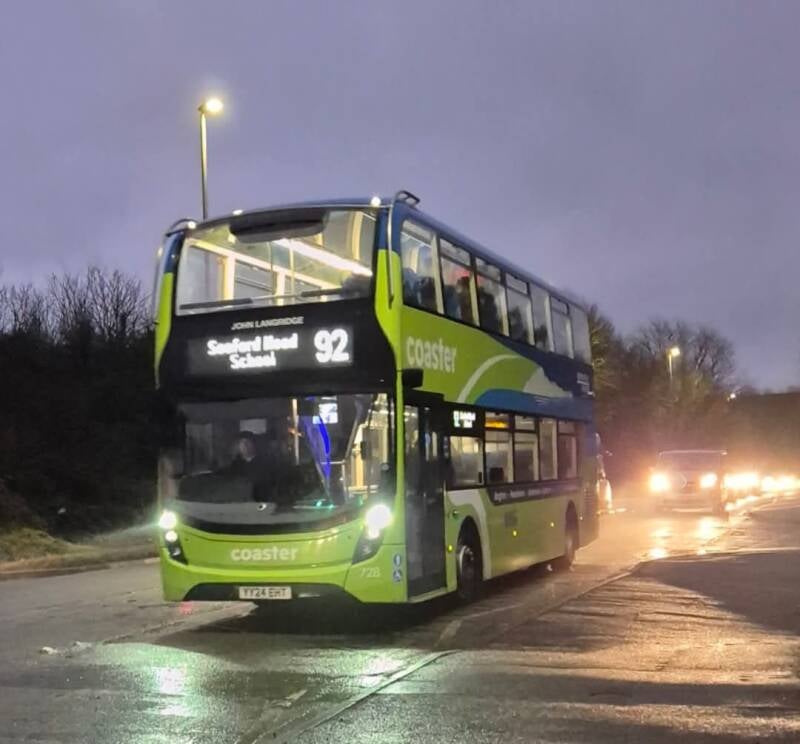
All encompassing
Route 92 previously run a direct servce between North Peacehaven and Seaford Head School. It ran two buses, one of which ran every weekday serving Avis Way industrial estate.


Identifier
The bus stop tiles no longer show the route numbers for specific services. In Brighton, school routes are shown on key stops.
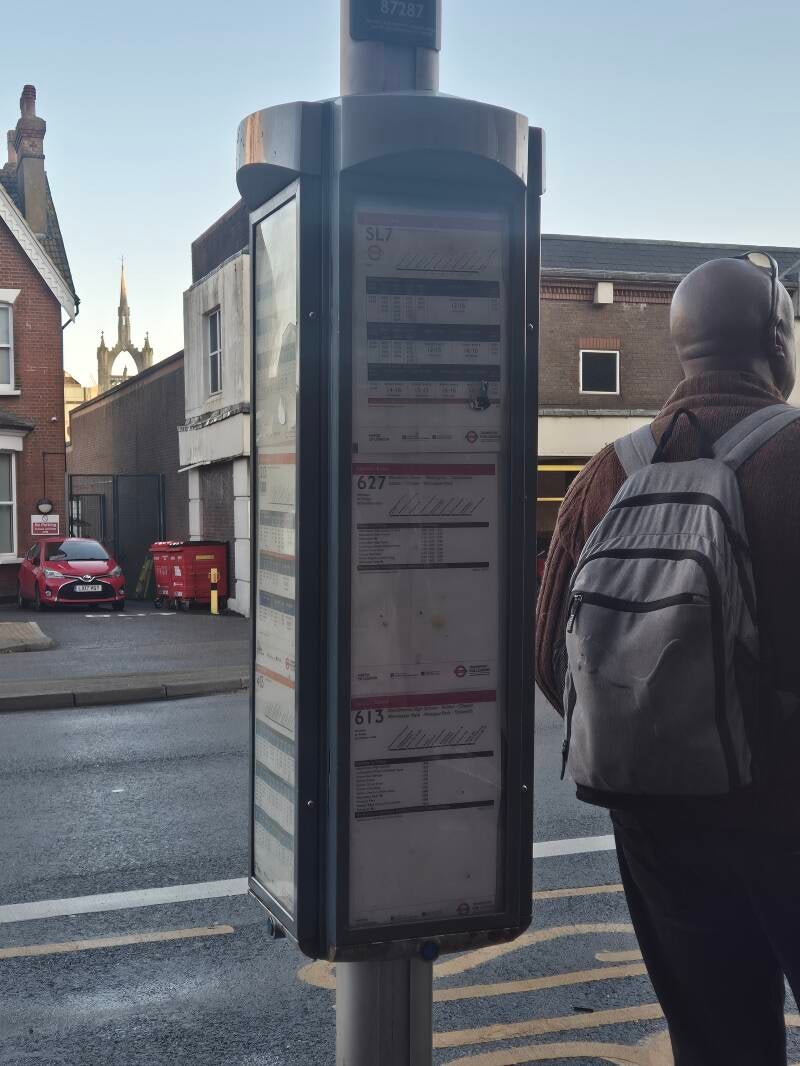
School on time
London school buses shown on the timetables in original format. Note 627 has three buses. Like here, these routes are technically 'open' to the public.
Some seperate school numbered services are shown in the timetable booklets for Brighton, but not on stop timetables.
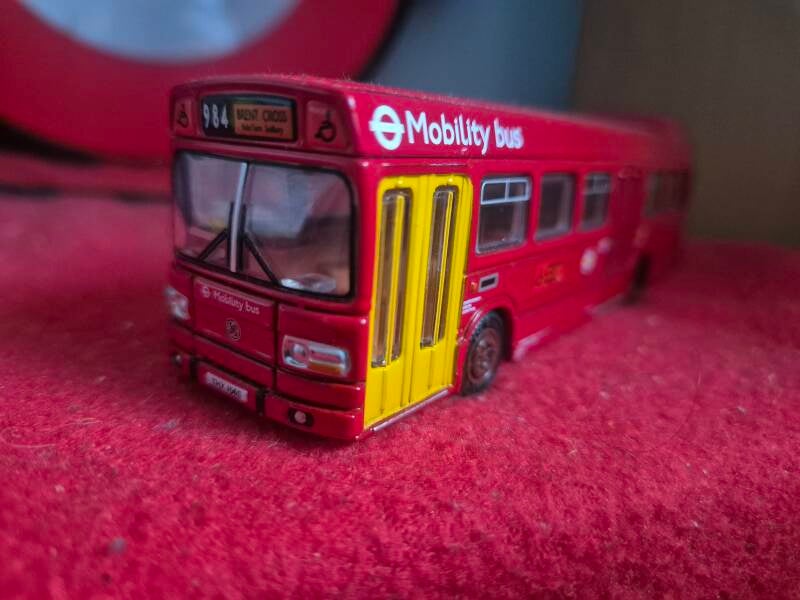
Upwardly mobile
As example of a Mobility bus, almost completely consigned to history. This is from my own collection.
Routes used for specific purposes always bring questions.

The spirit of the matter
A Plumton College coach leaves Peacehaven at the end of the route. These are 'closed' contract buses on lettered routes.
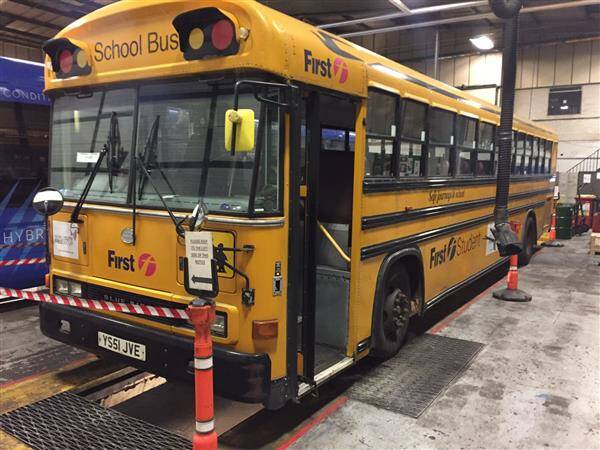
Custard lunch
An American school bus made for Britain.
Create Your Own Website With Webador